Pages

How Do I Enter Therapeutic Awareness
Therapeutic awareness is the beginning and end of Therapy.
Life naturally flows toward death and decay such that, if you do nothing, you are decaying and this is an acceptable part of life, not a tragedy.
In order to 'live' you must rejuvenate yourself; this rejuvenation is therapy.
The most basic form of therapy is positive, therapeutic awareness.
It is important that this awareness is as free as possible from unnecessary sensations of physical pain.
It is important that this awareness is as free as possible from unnecessary sensations of fear and anxiety.
It is important that this awareness exhibits a low degree of time pressure. Time should be slow, natural, and largely forgotten.
Therapeutic awareness must progress in a positive direction naturally without force, resistance, and domination.
The Philosophical Approach Part 1
This approach is influenced by the works of Indian philosopher Jiddu Krishnamurti. I understand Krishnamurti to say that there is no method to entering therapeutic awareness. Anyone who wants to do it must use the full measure of his or her attention to concentrate on the present moment awareness of his/her life, with a quiet mind, free from impinging impressions of the past, free of 'thinking' (free of the illusion of making choices by doing rituals directed by past experience), and with this mind that perceives present reality, may at times use the old mind of thought for purely technical purposes of living in a social world.
As an example, our normal way of operating is to plan on going to a college we have never been to and marrying a person whom we have an image or that we've never met; this is mistaken and how can we be anything but dissappointed. Rather you start with what is real and you can only perceive what is real when your fantasies about the future and memories of the past are silenced, and from that mind, you can use knowledge and the past, but not the other way around.
There is no more to be said of this method. Anything else to be learned, the one willing to learn it will learn by being aware in his or her daily life. I hold that this is presently my best answer but like all answers it is incomplete and we will try many different answers and approaches even some that seem to contradict each other because non-contradiction is not our concern here, as that is philosophy and we are concerned with action. In psychology and psychotherapy as in other fields, we are not dealing with single consistent information systems but many diverse and criss-crossing systems and contradiction is ubiquitious and not necessarily a problem.
As in all my expounding of the therapy, you may do some reading in the links for more information but better it is to live your therapy and if you do that by reading then read away but if your awareness tends toward other things or if you don't know what your awareness tends toward, let the mind be quiet and learn from yourself. No further reading is required so do so at your leisure and for the experience, not as a task.
Philosophical Approach Part II
For those with chronic pain and anxiety who need a plan to follow, or exercises, or a method, I recommend Mindfulness Meditation as taught and researched by Dr. Jon Kabat-Zinn at the University of Massachusetts Medical School's Stress Reduction Clinic. The book and audiotapes entitled Full Catastrophe Living are an absolutely magnanimous resource.
Please discuss in the comments sections any routes to reaching therapeutic states in daily life that you have used and find helpful.
The Pharmacological and Medical Approach
Drug treatments such as antidepressants, anti-pain medications, and anti-anxiety medications can remove barriers to entering therapeutic awareness. When pharmacological aid is needed, it is important to choose non-addictive substances with a low degree of tolerance, dependence, and withdrawal. The reason for this is because, like alcohol, when tolerance develops, withdrawal sets in within parts of the brain even if the drug is continued and this can lead to nervous dysfunction due to excitotoxicity. The effect is the kind of damage that happens during alcoholic delerium tremens withdrawal, but spread out over years (even decades of medication use, rather than an abrupt seizure or stroke seen in delerium dremens, alcohol withdrawal seizures, or strokes). There are approaches to treating pain, depression, and anxiety that use substances with a low potential for dependence and withdrawal. It will require research and testing to find which substances are the right fit for an individual. Safety, and weighing risks and benefits are of utmost importance.
New techniques such as deep brain stimulation and less invasive electrical stimulation techniques such as TENS units show some promise in the treatment of severe depression and pain. In the future, gene therapies may be available. Not only should technology be used to treat chronic depression and anxiety, it should also be used to bring people who experience normal levels of anxiety and pain above baseline to greater states of happiness and appreciation of life.
Above is a link to a discussion of euphoric pharmacology by phiosopher David Pearce who advocates the abolition of suffering via pharmacological and technological means. Again, it is not the goal of my particular therapy to prescribe, agree, or disagree with the information presented; rather, we are considering and learning.
Treatments such as ketamine, scopalamine, dextromethorphan (these three are rapid-acting antidepressants which requre extensive research and doctor monitoring; however, they work in as little as two hours (ketamine and dextromethorphan) to one day (scopalamine), gabapentin, and pregabalin (for chronic pain) among others have shown some efficacy in chronic pain, depression and anxiety with fewer side effects (gabapentin and pregalin still have a risk of dangerous withdrawals) than their more addictive counterparts like oxycontin and methaone. Please share in the comments section any treatments you have used or researched that were effective for mental health issues with a low potential for tolerance and dependence.

Experimental Psychopharmacology - The Manic Switch
PROCLAIMER : IT IS THE WRITER'S OPINION THAT IT IS VERY POSSIBLE THAT ONLY EXTERNAL MEANS SUCH AS DRUG TREATMENT, CHANGES IN DIET AND EXERCISE, OR IN EXTREME CASES, ELECTROSHOCK OR DEEP BRAIN STIMULATION CAN PRODUCE PROFOUND CHANGES IN ONE'S BASELINE LEVEL OF MOOD OR NERVOUS SYSTEM WELLNESS. AS SUCH, DRUG TREATMENTS AND OTHER EXTERNAL MEANS SHOULD BE CONSIDERED WITH AT LEAST EQUAL OR POSSIBLY GREATER GRAVITY THAN PHILOSOPHICAL OR COGNITIVE TREATMENTS. IT IS VERY POSSIBLE THAT A MIND AND BODY WHICH IS CHRONICALLY IN FEAR AND PAIN CANNOT BE CHANGED BY ANY TYPE OF THINKING OR PHILOSOPHY BUT ONLY BY EXTERNAL TREATMENTS.
Disclaimer: All of the treatments described are experimental and have side effects. None should be attempted without a doctor's monitoring. Links are provided to clinical trials for anyone interested.
The Claim: Evolution and genetics have produced a manic switch in hierarchical creatures that can quickly switch one from anxiety and depression to hypomania and elevated mood.
For more discussion of the evolutionary angle, see the collection entitled
Subordination and Defeat
An Evolutionary Approach to Mood Disorders and Their Therapy
by Leon Sloman and Paul Gilbert (editors)
Review by Keith S. Harris, Ph.D. on 1 Jul 2001.
An Evolutionary Approach to Mood Disorders and Their Therapy
by Leon Sloman and Paul Gilbert (editors)
Review by Keith S. Harris, Ph.D. on 1 Jul 2001.
It goes without saying that in the current human condition with our advanced cognition, anxiety and depression is not desirable at all, and one would be better served in a state of hypomania and elevated mood in any circumstances whatsoever. Hypomania also greatly decreases pain sensitivity and increases resilience to stress and better immunity.
The switch into hypomania is characterized internally by neuroplasticity, i.e. the brain begins to change and grow, the individual begins to explore and try new things whereas anxiety and depression are characterized by a stagnant mind ruminating on past fears. Hypomania is also characterized by rises in serotonin which has been documented in many creatures that switch from a subordinate to a dominant status.
This switch generally occurs in a person with a baseline of depressed mood due to a series of social gains or 'wins' when circumstances suddenly become very advantageous such as a lottery win or falling in love, and this mood elevation generally lasts fewer than 6 months before the person comes back to baseline depression. However, some treatments have shown and ability to produce a hypomania and improved mood in hours that lasts several days with one treatment. We will discuss 6 of these which have been studied recently.

1. Scopalamine
Scopalamine is a potent anti-cholinergic and used experimentally has been shown to produce a rapid switch from anxiety and depression into hypomania and elevated mood.
I hypothesize that like other medications in this group, the manic switch is caused by a stable blocking of acetylcholine in areas associated with anxious and troubling past memories and triggers. This memory blockade forces one to live in the present and explore current experience with confidence and curiosity. Scopalamine also reduces anxiety and pain sensitivity. Used at the right levels or with supportive medications, memory measures can be normal for non-traumatic memories.
Drawbacks of scopalamine include the possibility of overdose and a withdrawal syndrome.
Below is a link to a clinical trial of scopalamine for depression currently recruiting in Maryland, USA.

2. Ketamine
Several studies document rapid antidepressant response to ketamine. Ketamine is an NDMA (N-Methyl-D-aspartate) glutamate receptor antagonist which blocks glutamate and aspartate from activating the receptor. Glutamate is the main excitatory neurotransmitter involved in pain and memory in the brain, and glutamate receptors can be activated by glutamate such as contained in the food additive MSG (monosodium glutamate) and aspartate as contained in the sweetner aspartame both of which theoretically may increase pain and anxiety sensitivity.
Blockade of the receptor thus decreases nerve sensitivity overall and causes temporary mild depersonalization acutely, freeing the nervous system from pain and anxiety sensations, cutting one off from current and past pain and anxiety causing exploratory behavior resulting in neuroplasticity and increased mood, in other words, activating the manic switch from baseline mood to hypomania.
Below is a link to a clinical trial of ketamine for depression at Columbia University, currently recruiting.

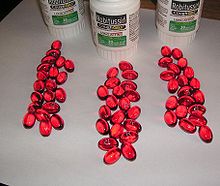
3. Dextromethorphan (OTC Robitussin Gels)
Dextromethorphan is an over-the-counter cough suppressant opioid derivative which acts as an NDMA antagonist at sufficient doses, and with actions on "NMDA, μ opiate, sigma-1, calcium channel, serotonin transporter, and muscarinic sites", similar to ketamine. Dextromethorphan abuse is called 'robotripping' and causes dissossicative depersonalization, mild euphoria, psychosis and hallucinations at high doses, altered time experience, insensitivity to pain and anxiety, and blocks the effects of other psychoactive substances.
I have written on how to use dextromethorphan for chronic pain with your doctor's monitoring here:
Dosage and possible cross tolerance with opiates can be an issue with dextromethorphan. After one has achieved a 'robotrip', slightly below that dose may provide relief for treatment resistant chronic pain and depression. However, no one can tell you to robotrip as it is not safe and generally not legal but it is possible for your doctor to carefully raise your dose from an OTC dose which is 90 mg and monitor you so that you achieve an effective dose without the symptoms sought by abusers.
I have written about dextromethorphan because the safety and side effect profile is better than that of opiates such as methadone and oxycodone, however, the safety profile of experimental doses is less than or equal to that of treatments such as gabapentin and traditional antidepressants so experimenting should be done carefully with your doctor's monitoring and is best for those who want to get off of opiates or for whom gabapentin and tricyclic antidepressants are ineffective.
Dextromethorphan has very little physical addiction or withdrawal syndrome.
A 90mg dose of O-T-C dextromethorphan in Robitussin gels may be effective as an add on treatment for pain, depression, and anxiety when one is taking opiates or benzodiazepines to block symptoms of withdrawal including shaking, sweating, pins and needle sensations, and nausea. Get your doctor's advice to avoid adverse reactions, including serotonin syndrome which could be very serious. Magnesium with glycine as as cofactor is the body's natural NDMA antagonist and can also be used to block tolerance and withdrawal from prescribed opiates and sedatives and is much safer and readily available.
Below is a link to a clinical trial of Dextromethorphan/quinidine for neuropathic pain in Multiple Sclerosis in the US, currently recruiting:
Each of these treatments are experimental but currently available in some form. Dextromethorphan is available over the counter in Robitussin Gels and in prescription as Nudexta. Scopalamine is available as transdermal patches. Ketamine is currently used only experimentally for depression and routinely as anesthesia in pediatric contexts. Anyone wanting to try them for pain or depression can join one of the trials listed or contact your doctor and create a safe, well-researched plan to explore these treatments in a way that reduces the risk of side effects as each of these treatments can have severe side effects used in the wrong way.

4. Deep brain stimulation and other electro-magnetic therapy
There is no doubt that deep brain stimulation may relieve depression and other neurological suffering. The draw back is the obvious side effects that come along with skull perforation and electrode implants inside the brain. It is indicated for very extreme depression and severe brain dysfunction but can in the future be improved such that it is available for anyone wanting a mood boost.
Below is a clinical trial of deep brain stimulation for treatment resistant OCD.
A much safer therapy called transcranial direct current stimulation is now available that uses electrodes placed on the head to direct a low current to parts of the brain which are malfunctioning.
Below is a link to a clinical study of transcranial direct current stimuation to relieve knee pain in osteoarthritis, in Massachusetts.
It is my opinion that safer therapies will progress to the point of being available to all to boost mood and performance. I suspect that small electrodes directed in through the nasal passages to sites of stimulation experienced by drug abusers who snort active substances will prove to be a safer and more effective route to deliver a current to the pleasure centers of the brain via smell nerve receptors that send pleasure signals via a direct route to the brain.

5. Magnesium treatment
Magnesium from 125-800mgs has been shown to relieve depression in some clinical settings, especially in magnesium deficiency. Magnesium is the body's natural NDMA antagonist and glutamate blocker and like ketamine and dextromethorphan block the NDMA receptor when combined with glycine. Magnesium taurinate and magnesium glycinate have been shown to be particularly effective, as have intraveneous magnesium infusion. Other forms of magnesium may be harder to absorb or may not reliably make it into the blood stream; however, many persons have been able to achieve a natural relaxation effect with magnesium sulfate in epsom salts which are readily available. Magnesium is more effective for chronic pain when combined with an antidepressant such as Elavil.
Magnesium is also used to attenuate sedative withdrawal.
Those with chronic pain and anxiety who use opiates, benzodiazepines, gabapentin, venlafaxine or other substances that can produce withdrawal may be greatly helped by supplementing with magnesium to prevent partial withdrawal evident by shaking, sweating, nausea, nervousness, and pins and needle sensations on the skin which is evidence of excitotoxicity which can cause secondary nerve damage.
The Scientific Happiness Research Approach
Happiness research has produced some findings which are touted to lead to happiness which I define as therapeutic states. In pursuing happiness, it is very easy to end up in the very same trap that the philosophical approach rejects: wanting, having, being dissatisfied, and repeating this pattern. However, it is possible that the philosophical approach is limited because we are resource-grubbing biological beings evolved in hiearchical social groups and these are the imputs that we can expect to respond to. Again, it's not the purpose of this therapy to decide which viewpoint is right or wrong because although proponents of one view or another will hold that you cannot do one AND the other, that they are mutually exclusive to comprehend or actualize, that is mere tribalism, and untrue. You can try them all whenever, however you like. When someone correctly describes reality, it does not belong to them, it's not a theory, it's real. So, if you do something which actually works and is actually effective, it doesn't matter who said it or what theory it comes from or who believes it or what it contradicts. We will explain the theoretical and cognitive underpinnings of this therapy later, but now understand, we do not argue ontological absolute truths, rather we use whatever patterns, algorithms, and information might be useful.
Dr. Martin Seligman, a proponent of positive psychology, has devised a formula for happiness called the PERMA formula:
P - Positive emotions
E - Positive engagement
R - Positive relationships
M - Meaning
A - Accomplishments
I believe this formula can be used productively OR it can be used non-productively to judge oneself as a failure or not good enough, but we will simply have to see if it is useful for us individually.
Last, and least, as the approaches are listed hierachically according to my own preferences, the last approach is pursuing success with an eye toward happiness, essentially, an exalted form of the rat-race. The following list was compiled by researchers in the field of happiness research. Pluses indicate a greater association with happiness and minuses a negative association.
These correlates will suggest some directions for growth or change, individually or politically. You may decide for example to improve your income or to move to a place where there is less racial discrimination or take that on as a cause if it has been a problem. However, you will see that though higher income is associated with greater happiness, having goals to improve incomes seems to be negatively associated with happiness. So use the list skeptically to reason out and possibly inform some of your own thinking, not as a guide to follow to success. It must be understood, cautioned in fact, that the endless pursuit of goals and accomplishments will generally not lead to higher levels of well-being and therapeutic states unless one is already of that character; however, it can not be ruled out that this is a valid avenue to explore so caution is in order.
Economic
1. Income +/0
2. Economic growth +/0
3. Public health ++
4. Income equality ++
Political
1. Coercion by state - -
2. Liberal democracy ++
3. Interest democracy ++
4. Political unrest - -
Local Conditions
1. Small vs. big town – (in US, better to live in small town)
2. Local economic prosperity +
Social Position- Ascribed
1. Gays -/0
2. Immigrants –
3. Blacks -/0
Social Position – Achieved
1. Family income ++ or +
2. Education +/0
3. Public perceived job prestige +
4. Self perceived job prestige +
5. Current global social rank ++/+
Work
1. Having work – chief wage earner ++/-/0
2. Having work – elderly +/0/-
3. Having work – married women +/0
4. Professional ++
5. Clerical +
6. Skilled manual 0
7. Unskilled manual –
8. peasant - -
9. Voluntary work membership +
10. Voluntary work activity +
Intimate ties
1. Having spouse ++/+
2. Quality bond ++
3. Happiness of spouse ++
4. Having children –
5. Quality contacts ++
6. Number friends/relatives +
7. Frequency contact friends/relatives +
8. Confidence with friends/relatives ++
Resources
1. Physician rated health +/0
2. Self rated health ++
3. Health complaints –
4. Handicaps -/0
5. longevity _
6. Mental impairment - -
7. Positive mental effectiveness ++
8. Mental maturity ++
9. Social ability ++
10. Intelligence 0/+
11. Actual activity ++
12. Appetite for activity ++
Personality
1. Belief in fate control +
2. Defense – turning against –
3. defense- projection –
4. defense – repression 0
5. defense – concealment +
6. defense reversal +
7. defense- intellectualization +
8. Aptness to find things pleasant -
9. Time orientation – time expansion +/0
10. Time orientation – temporal emphasis -/0
11. Time orientation – organization +/0
12. Time pressure 0
13. Time orientation - Speed of passage +
Lifestyle
1. Activity in leisure ++/+
2. Going to bed late +
3. Laborious living +/0
4. Sober living –
5. Renouncing fun –
Longings
1. Want change - -
2. Goals – values/character _
3. Goals – Family +
4. Goals – health +
5. Goals – Society +/0
6. Goals – Work 0
7. Goals – Money –
Convictions
1. Emphasis on ethical values 0/+
2. Ethical value of sharing with intimates 0/+
3. Religiousness 0/+
4. Denomination 0/+
5. Political conservatism +
6. Sexual conservatism 0/+
7. Moral acceptance of happiness +
Satisfaction/Appreciation of the Following:
1. Intimate ties +++
2. Income +++
3. Oneself +++
4. Leisure ++
5. Work ++
6. Health ++
7. Living environment +
8. Country +
9. Recalled earlier happiness +
1. Income +/0
2. Economic growth +/0
3. Public health ++
4. Income equality ++
Political
1. Coercion by state - -
2. Liberal democracy ++
3. Interest democracy ++
4. Political unrest - -
Local Conditions
1. Small vs. big town – (in US, better to live in small town)
2. Local economic prosperity +
Social Position- Ascribed
1. Gays -/0
2. Immigrants –
3. Blacks -/0
Social Position – Achieved
1. Family income ++ or +
2. Education +/0
3. Public perceived job prestige +
4. Self perceived job prestige +
5. Current global social rank ++/+
Work
1. Having work – chief wage earner ++/-/0
2. Having work – elderly +/0/-
3. Having work – married women +/0
4. Professional ++
5. Clerical +
6. Skilled manual 0
7. Unskilled manual –
8. peasant - -
9. Voluntary work membership +
10. Voluntary work activity +
Intimate ties
1. Having spouse ++/+
2. Quality bond ++
3. Happiness of spouse ++
4. Having children –
5. Quality contacts ++
6. Number friends/relatives +
7. Frequency contact friends/relatives +
8. Confidence with friends/relatives ++
Resources
1. Physician rated health +/0
2. Self rated health ++
3. Health complaints –
4. Handicaps -/0
5. longevity _
6. Mental impairment - -
7. Positive mental effectiveness ++
8. Mental maturity ++
9. Social ability ++
10. Intelligence 0/+
11. Actual activity ++
12. Appetite for activity ++
Personality
1. Belief in fate control +
2. Defense – turning against –
3. defense- projection –
4. defense – repression 0
5. defense – concealment +
6. defense reversal +
7. defense- intellectualization +
8. Aptness to find things pleasant -
9. Time orientation – time expansion +/0
10. Time orientation – temporal emphasis -/0
11. Time orientation – organization +/0
12. Time pressure 0
13. Time orientation - Speed of passage +
Lifestyle
1. Activity in leisure ++/+
2. Going to bed late +
3. Laborious living +/0
4. Sober living –
5. Renouncing fun –
Longings
1. Want change - -
2. Goals – values/character _
3. Goals – Family +
4. Goals – health +
5. Goals – Society +/0
6. Goals – Work 0
7. Goals – Money –
Convictions
1. Emphasis on ethical values 0/+
2. Ethical value of sharing with intimates 0/+
3. Religiousness 0/+
4. Denomination 0/+
5. Political conservatism +
6. Sexual conservatism 0/+
7. Moral acceptance of happiness +
Satisfaction/Appreciation of the Following:
1. Intimate ties +++
2. Income +++
3. Oneself +++
4. Leisure ++
5. Work ++
6. Health ++
7. Living environment +
8. Country +
9. Recalled earlier happiness +
Now What Do I Do?
In the purest sense, you don't 'do' anything, you live and grow from the 'mind of reality' which you have when you are in the therapeutic state. In the therapeutic state, in the moment, not consumed with the past or fantasy and possibility, you are faced with what is now, what you are and what the world is. You live it and be it and grow. You perceive reality and grow. That is really the hard part. Normally, we have a plan of possibilities of some school we've never seen and some person we are going to marry whom we haven't met. Then we get there and are totally surprised it's not what we thought. How could it possibly have been? That is starting in the world of fantasy and allowing that world to distort your view of reality. Instead, you would see what is now and what it requires and what growth is, what growth means from that perspective. Again, there is not much I can tell you about that perspective because it is wholly yours and your life and only your experience will tell you.
Thank you,
DF Seldon, MS, NBCC
Feel free to comment!